

MB
Pure Mathematics
The research areas cultivated by the Pure Mathematics group encompass a broad spectrum of pure mathematics, including Commutative Algebra, Analysis and Functional Analysis, Differential Equations and Dynamical Systems, Mathematical Physics, Algebraic and Complex Geometry, Differential Geometry, Lie Algebras and Groups, and Topology. Our research efforts are complemented by initiatives in academic and industrial outreach.Research Lines and Groups

Commutative Algebra and Algebraic Geometry
Analysis

Partial Differential Equations
Differential Geometry

Dynamical Systems

Topology
Commutative Algebra and Algebraic Geometry
Commutative algebra and algebraic geometry are closely related areas. Commutative algebra studies commutative rings, their ideals, and modules. Algebraic geometry, on the other hand, originated in the analysis of the solution sets of systems of polynomial equations and explores the geometric structures that arise from them.
At Cimat, research in these areas includes topics such as local cohomology, algebraic combinatorics, arithmetic geometry and number theory, geometric invariant theory, logarithmic geometry, algebraic curves, moduli spaces, rings of differential operators, foliations, the study of schemes, vector bundles, algebraic groups and homogeneous spaces, p-adic analysis and geometry, motivic homotopy theory, real and tropical algebraic geometry, non-Archimedean geometry, Hodge theory, methods in prime characteristic, and singularity theory.
Group of researchers:
Senior Researchers
Associate Researchers
Researchers for Mexico
Post-Doctorates
Analysis
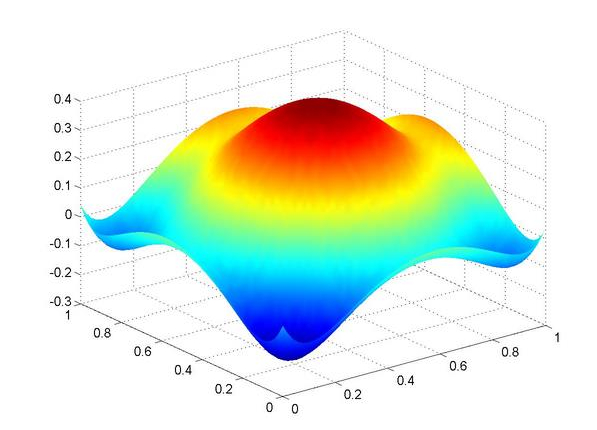
Analysis studies, both quantitatively and qualitatively, function spaces, their metric or topological structures, and the transformations acting on them. Currently, it connects with geometry, operator theory, differential equations, mathematical physics, dynamical systems, and probability. At Cimat, the analysis group is diverse, encompassing a rich variety of research lines:
Functional analysis and geometry in Banach spaces: We explore polynomial, multilinear and Lipschitz transformations between Banach spaces and their relationship with convex geometry and the structure of function spaces.
Operators as well as complex and hypercomplex analysis: We study operators on function spaces using operator theory, C*-algebras and von Neumann algebras, group representations, quaternionic analysis, differential geometry and Lie groups.
Mathematical physics: We investigate mathematical properties of various Hilbert spaces, such as the Segal–Bargmann space and reproducing kernel spaces, in connection with quantum mechanics through methods of functional analysis. We also study Toeplitz operators that provide a form of quantization. Differential geometry admits a generalization known as quantum (or noncommutative) geometry, which we use to study Dunkl operators that arise in harmonic analysis. Other interests include quantum channels and the axiomatization of quantum mechanics and its relationship with quantum probability.
Analysis of differential equations: We address regularity and qualitative properties of elliptic, parabolic and nonlocal equations as well as their connections to problems in geometry, probability and dynamical systems.
Fixed point theory: Fixed point theory is a fundamental tool for proving the existence of solutions to various problems and equations, and it has important applications in optimization.
Senior Researchers
Associate Researchers
Researchers for Mexico
Post-Doctorates
Partial Differential Equations
In the Partial Differential Equations group at Cimat we study both theoretical and applied aspects of the field. On the one hand, our research addresses nonlinear elliptic problems with parameters, the control of multiparameter systems through integrability techniques, and the stability of mechanical systems described by operators in spaces with indefinite metrics. On the other hand, we develop regularity theory tools for elliptic and parabolic problems, both local and nonlocal, including degenerate models and free boundary problems. These research directions connect with topics in differential geometry, fluid mechanics, control theory, and models of transport and congestion.
Group of researchers:
Senior Researchers
Associate Researchers
Researchers for Mexico
Post-Doctorates
Differential Geometry
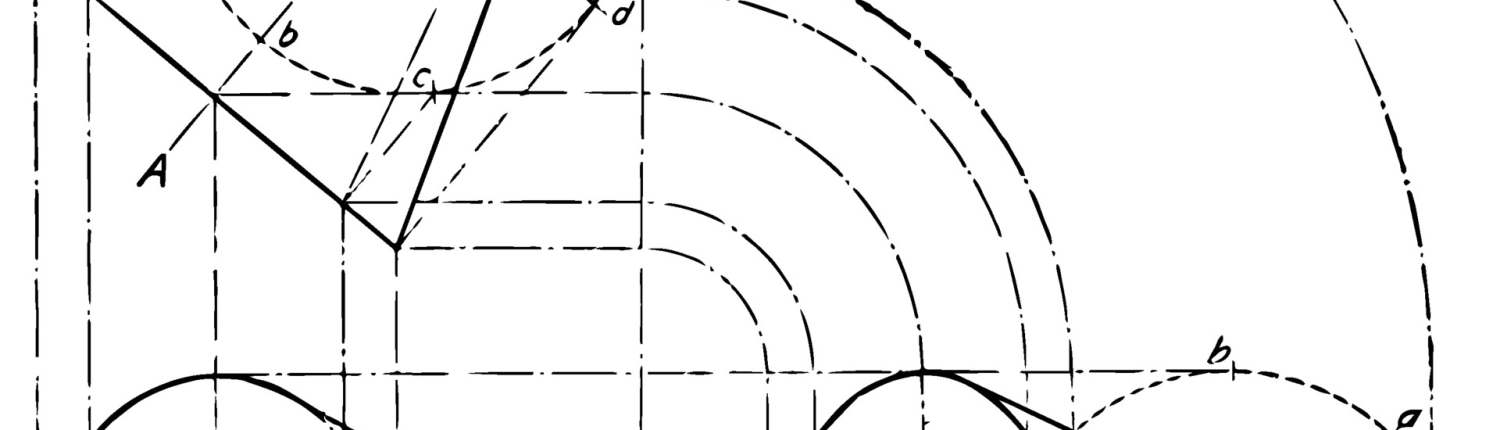
This group works in various areas of differential geometry. Geometric structures on differentiable manifolds are studied, as well as the transformation groups that preserve these structures. Techniques and results from geometric analysis, topological analysis, symplectic geometry and topology, functional analysis, differential equations, Lie theory, and non-associative algebras, among others, are employed, along with a wide range of generalizations of these methods. The main results obtained establish connections between geometry—in its different forms (Riemannian, symplectic, spinorial, etc.)—and topology, analysis, and algebra, among others.
Group of researchers:
Senior Researchers
Associate Researchers
Researchers for Mexico
Post-Doctorates
Dynamical Systems
Broadly speaking, Dynamical Systems study the long-term behavior of evolving systems, and therefore their origins and applications are connected to various branches of the natural sciences. From the perspective of pure mathematics, Dynamical Systems aim to understand the global structure of maps and flows, which may be real or complex. This area is closely related to several branches of mathematics (for example, Analysis, Topology, Geometry, Probability, and Number Theory), and this relationship is bijective: it draws tools from them and, in turn, provides applications. The main research lines developed at CIMAT are Holomorphic Dynamics (over the complex numbers or over non-Archimedean fields) and Conservative Systems (both in their abstract formulation and in the concrete models that arise in the study of Celestial Mechanics).
Group of researchers:
Senior Researchers
Associate Researchers
Researchers for Mexico
Post-Doctorates
Topology
Topology is the area of mathematics that studies shapes and spaces under continuous deformations. A typical example is that of a coffee mug being continuously deformed into a donut. The abstract form of these objects is called a topological space.
Topological structure is present in many more complex mathematical objects, such as differentiable manifolds, metric spaces, algebraic varieties, and others. By focusing solely on their topological aspects, hidden patterns are revealed and synthesized into what are known as topological and homotopical invariants. These structures also appear in problems from other sciences that can be interpreted geometrically. For this reason, topology is relevant to many branches of mathematics and other disciplines, such as data analysis, physics, and biology.
The members of the topology group at Cimat are based in the Guanajuato and Mérida campuses, and they currently work in the following areas:
Our members are also involved in organizing recurring activities dedicated to student training, continuous professional development, and collaboration with other institutions, such as:
Group of researchers:
Senior Researchers
Associate Researchers
Researchers for Mexico
Post-Doctorates
Postgraduate programs
The graduate programs in Basic Mathematics and Applied Mathematics at CIMAT were created in September 1993 with the goal of promoting the development of a mathematical culture and the mathematical sciences in general, according to international standards. On September 2, 1993, Dr. Adolfo Sánchez Valenzuela welcomed the first cohorts of students to the Master's program in Basic Mathematics and the Doctoral program in Science. Since then, both the academic staff and the number of students have grown significantly.
In addition to a wide range of regular courses, each semester features parallel seminars on diverse topics such as difference geometry, commutative algebra, mathematical physics, and topology of low-dimensional manifolds, among others. Throughout the year, our students' academic life is enriched by schools, mini-courses, and workshops that allow them to connect with top-level national and international researchers, beyond the Cimat research staff.


